Northwestern University Athletics
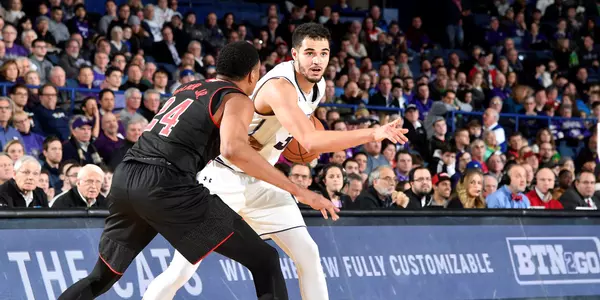
The Skip Report: Aaron Falzon's Comeback
2/4/2018 2:45:00 PM | Men's Basketball
By Skip Myslenski
NUSports.com Special Contributor
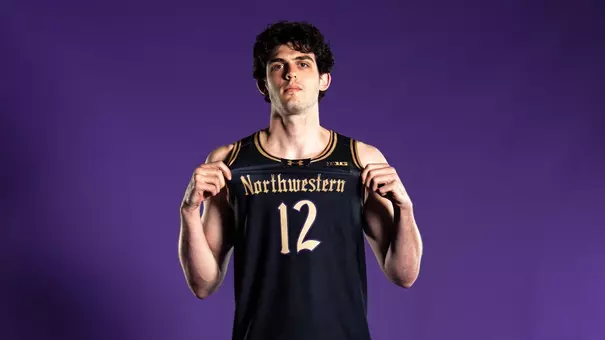
You are Aaron Falzon and, as a true first year back in the 2015-16 season, you started 29 games and dropped 63 3-pointers and averaged 8.4 points and 24.5 minutes. This was a solid start to a career, a debut that augured some auspicious displays, but then came late spring and the discovery of a partial tear in your left knee. Now, so suddenly, your future jumped to another track, and you began a journey that continues on even now and even with you back in the 'Cats rotation.
First came a PRP (platelet rich plasma) injection and six weeks of inactivity, both aimed at promoting and catalyzing healing. "It halfway healed," you remember of your knee, "so I came into (last) season thinking I could play through it. But I was pretty much in constant pain and I wasn't playing very well. I wasn't myself. So I thought it best to take that year and get healthy."
You did that after dressing for five games, after playing in only three games, after totaling just 20 minutes and missing all three shots that you took, and on December 8th of 2016 you had surgery. "It was definitely tough," you will say when asked about watching the historic run that would come. "I never had a year where I sat out more than two weeks. I've always been playing basketball. It's the thing I love to do. So sitting out it was tough, first of all, not playing the game. Second of all, I knew how great an off-season we had and I saw how great the team was going to be. I kinda knew the year we were going to have, so I was bummed I wasn't going to be a part of that."
You are told here that head doctors say the two greatest causes of depression are illness and losing something you love. An injured player is, in effect, ill and most certainly robbed of the game he loves, but still you avow that you never had to battle the blues. "I have great teammates. We were together throughout the whole period and I still felt part of the team," you explain. "I'd come to practice everyday. I'd try to help guys out, I got the chance to look at the game through a different lens. I got a chance to just watch— watch how the team worked, and watch how individuals worked, and watch what the coaches were looking for. Freshman year everything moved really fast. Now the game has slowed down, especially after I had a year to look at it."
But, of course, you did much more than just watch in the wake of your operation. You also rehabbed, a process you began a mere week after going under the knife. "I spent hours and hours with Jen," you say, speaking of Northwestern associate director of athletic training services Jen Tymkew, and she is not an unimportant part of your journey. For, as you now know, rehab can be as tiresome as a screeching scold, as boring as a baloney sandwich, and she helped make it more tolerable for you. "It's something I'd never been part of," you remember. "Everyday you try and get little increments. It's just so hard. You can't do things you can normally do."
But, Tymkew says of you, "Aaron's so motivated to get better. Days that I was down a little bit, he'd come in and say, 'Okay, what are we doing today?' I get bored very easily as well, so I take the stance with these guys of, 'Okay, if we did this yesterday, what can we do different today?' So there's some variables. Then it really was setting those small goals for him. He had a decently long rehab, so what could we set that he could attain during it so he could see progress?"
"It's really hard," you pick up. "But Jen did a really good job of giving me little goals I could shoot at every day. She even made me a little video of pre and post surgery of me doing squats. Before surgery I could do like two and after I could do 25 in a row. So you do get little victories along the way. But it's definitely hard."
"Sometimes it's as simple as let's get your full range of motion. 'Can your knee fully bend to the same place your other leg can?'" Tymkew says, describing another victory along the way. "Very simple things where he can go, 'Yeah. I got that today.' Because every time you introduce a new exercise, it's hard. That new exercise is hard every time."
For months that is how your days unfolded, in search of small victories, and then came the next step in the process, that step where Tymkew reintroduces you to functional tasks. "So as he gets to full strength, as he gets his range of motion, let's start shooting," she explains. "OK. You can do standstill shooting. Now can you shoot off a cut? Slowly introduce stuff. . . . My goal is to get him to do as much in a controlled environment with me before I stick him in a kind of uncontrolled environment where he has to react to things and play basketball."
You finally did get back onto the court last spring, some four months after your operation, and here you were struck by your new reality. "I could always dunk easily," you remember. "I'm not a high flyer, but dunking was always easy me being 6-8. But I got back on the floor and I was, 'Wow, I can barely touch the rim.'" But still. You were on the floor, and by summer you were going five-on-five, and now you looked on time to start this season healthy.
But then, in quick succession, you suffered a hip flexor and got banged up in practice, and those twin tolls kept you sidelined for the year's first three games. "It was frustrating," you remember. "I was so excited to be back on the court with the guys and missing the first three games was like—I was, 'Oh, no. Here we go again.'"
It wasn't that bad. You have missed only one more game along the way, and have recently resembled your old first year self. But here's the thing about you now, the very bottom line. "It's still a process. It's still going to take some time," your coach Chris Collins will say. "Anytime you have major knee surgery, you talk to people, they say it's a full year before you fully feel back. So I think he's still in that process."
"It's a long journey, but every single day you have to get better," you finally say. "From the first day, when I could barely lift my leg after surgery, to now, when I'm able to run and jump and do all the things I love to do, it's been everyday doing a little something to get better. Do another leg raise, or leg curl, or something like that.
"Coming back, you always think you're going to be what you were, and you always think everything's going to be as easy as it was before. . .(and) I am starting to get more comfortable. But it's not going to happen overnight. I played 32 games my freshman year. I was consistently playing. Now, coming back from injury, I kind of have to find my way on how I can get back on the team.
"But I see myself getting better. Even as it gets deep into the Big Ten season, I see myself getting better every day."
You are Aaron Falzon.
NUSports.com Special Contributor
You are Aaron Falzon and, as a true first year back in the 2015-16 season, you started 29 games and dropped 63 3-pointers and averaged 8.4 points and 24.5 minutes. This was a solid start to a career, a debut that augured some auspicious displays, but then came late spring and the discovery of a partial tear in your left knee. Now, so suddenly, your future jumped to another track, and you began a journey that continues on even now and even with you back in the 'Cats rotation.
First came a PRP (platelet rich plasma) injection and six weeks of inactivity, both aimed at promoting and catalyzing healing. "It halfway healed," you remember of your knee, "so I came into (last) season thinking I could play through it. But I was pretty much in constant pain and I wasn't playing very well. I wasn't myself. So I thought it best to take that year and get healthy."
You did that after dressing for five games, after playing in only three games, after totaling just 20 minutes and missing all three shots that you took, and on December 8th of 2016 you had surgery. "It was definitely tough," you will say when asked about watching the historic run that would come. "I never had a year where I sat out more than two weeks. I've always been playing basketball. It's the thing I love to do. So sitting out it was tough, first of all, not playing the game. Second of all, I knew how great an off-season we had and I saw how great the team was going to be. I kinda knew the year we were going to have, so I was bummed I wasn't going to be a part of that."
You are told here that head doctors say the two greatest causes of depression are illness and losing something you love. An injured player is, in effect, ill and most certainly robbed of the game he loves, but still you avow that you never had to battle the blues. "I have great teammates. We were together throughout the whole period and I still felt part of the team," you explain. "I'd come to practice everyday. I'd try to help guys out, I got the chance to look at the game through a different lens. I got a chance to just watch— watch how the team worked, and watch how individuals worked, and watch what the coaches were looking for. Freshman year everything moved really fast. Now the game has slowed down, especially after I had a year to look at it."
But, of course, you did much more than just watch in the wake of your operation. You also rehabbed, a process you began a mere week after going under the knife. "I spent hours and hours with Jen," you say, speaking of Northwestern associate director of athletic training services Jen Tymkew, and she is not an unimportant part of your journey. For, as you now know, rehab can be as tiresome as a screeching scold, as boring as a baloney sandwich, and she helped make it more tolerable for you. "It's something I'd never been part of," you remember. "Everyday you try and get little increments. It's just so hard. You can't do things you can normally do."
But, Tymkew says of you, "Aaron's so motivated to get better. Days that I was down a little bit, he'd come in and say, 'Okay, what are we doing today?' I get bored very easily as well, so I take the stance with these guys of, 'Okay, if we did this yesterday, what can we do different today?' So there's some variables. Then it really was setting those small goals for him. He had a decently long rehab, so what could we set that he could attain during it so he could see progress?"
"It's really hard," you pick up. "But Jen did a really good job of giving me little goals I could shoot at every day. She even made me a little video of pre and post surgery of me doing squats. Before surgery I could do like two and after I could do 25 in a row. So you do get little victories along the way. But it's definitely hard."
"Sometimes it's as simple as let's get your full range of motion. 'Can your knee fully bend to the same place your other leg can?'" Tymkew says, describing another victory along the way. "Very simple things where he can go, 'Yeah. I got that today.' Because every time you introduce a new exercise, it's hard. That new exercise is hard every time."
For months that is how your days unfolded, in search of small victories, and then came the next step in the process, that step where Tymkew reintroduces you to functional tasks. "So as he gets to full strength, as he gets his range of motion, let's start shooting," she explains. "OK. You can do standstill shooting. Now can you shoot off a cut? Slowly introduce stuff. . . . My goal is to get him to do as much in a controlled environment with me before I stick him in a kind of uncontrolled environment where he has to react to things and play basketball."
You finally did get back onto the court last spring, some four months after your operation, and here you were struck by your new reality. "I could always dunk easily," you remember. "I'm not a high flyer, but dunking was always easy me being 6-8. But I got back on the floor and I was, 'Wow, I can barely touch the rim.'" But still. You were on the floor, and by summer you were going five-on-five, and now you looked on time to start this season healthy.
But then, in quick succession, you suffered a hip flexor and got banged up in practice, and those twin tolls kept you sidelined for the year's first three games. "It was frustrating," you remember. "I was so excited to be back on the court with the guys and missing the first three games was like—I was, 'Oh, no. Here we go again.'"
It wasn't that bad. You have missed only one more game along the way, and have recently resembled your old first year self. But here's the thing about you now, the very bottom line. "It's still a process. It's still going to take some time," your coach Chris Collins will say. "Anytime you have major knee surgery, you talk to people, they say it's a full year before you fully feel back. So I think he's still in that process."
"It's a long journey, but every single day you have to get better," you finally say. "From the first day, when I could barely lift my leg after surgery, to now, when I'm able to run and jump and do all the things I love to do, it's been everyday doing a little something to get better. Do another leg raise, or leg curl, or something like that.
"Coming back, you always think you're going to be what you were, and you always think everything's going to be as easy as it was before. . .(and) I am starting to get more comfortable. But it's not going to happen overnight. I played 32 games my freshman year. I was consistently playing. Now, coming back from injury, I kind of have to find my way on how I can get back on the team.
"But I see myself getting better. Even as it gets deep into the Big Ten season, I see myself getting better every day."
You are Aaron Falzon.
••••••
Be the first to know what's going on with the 'Cats -- Follow @NU_Sports on Twitter, become a fan of Northwestern Athletics on Facebook, check us out on Instagram, visit our Social Media page and download our mobile app from the Apple Store and Google Play! To get involved with the #B1GCats, become a season-ticket holder or join the Wildcat Fund!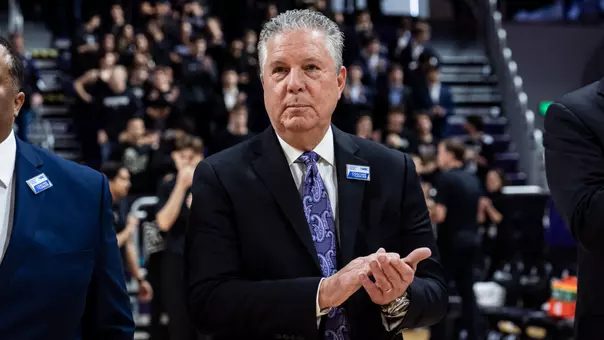
Players Mentioned
F
/ Men's BasketballMen's Basketball - Purdue Postgame Press Conference (3/12/26)
Friday, March 13
Men's Basketball - Wildcats Fall to Boilermakers in Big Ten Tournament (3/12/26)
Friday, March 13
Men's Basketball - 'Cats Advance in Big Ten Tournament with 74-61 Win Over Indiana (3/11/26)
Thursday, March 12
Men's Basketball - Indiana Postgame Press Conference (3/11/26)
Thursday, March 12