Northwestern University Athletics
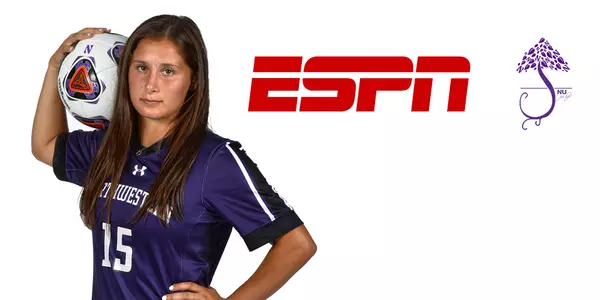
Haskel Heads to ESPN for Immersion Program
7/24/2017 10:44:00 AM | Women's Soccer, David G. Kabiller NU for Life Program
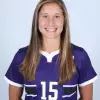
BRISTOL, Conn. — While taking a summer break from the pitch, women's soccer player Jenny Haskel is pitching in at ESPN.
"It's going to give me a greater perspective on the occupations within the Network and the things I can go into after college," the rising junior said.
Haskel will start her week-long stay at ESPN on Monday, July 24. Organized through NU for Life, the I-MAP program enables six sophomore and junior student-athletes to participate in a 3-5 day immersion experience in an industry of their choice. Participants are selected based on academic achievement, maturity, commitment level and enthusiasm for building relationships and furthering professional development.
A native of Basking Ridge, New Jersey, Haskel has already amassed tremendous experience in only two years at Northwestern.
In addition to the I-MAP ESPN experience, she served as a marketing and digital content intern for the MLS's Chicago Fire this summer, helping maintain the website, produce press releases, and write feature stories. This past winter, she was a marketing intern for the Big Ten Network, focusing on branding. On campus, she is involved with the Northwestern News Network, a student-run television station.
She long wanted an experience like this, but an experience in April accelerated the progress. Northwestern was the first Big Ten school to host an espnW "Campus Conversation," and Haskel was able to network with espnW executives who organized an additional dimension to her I-MAP experience. One day in Bristol will be spent at espnW, learning about the brand.
Haskel is focusing on broadcast journalism at the prestigious Medill School of Journalism, while also pursuing a double-major in economics. With those dual interests in mind, she is working with both the on-air and business teams at ESPN.
The I-MAP program is one of several professional development experiences offered through NU for Life, Northwestern athletic department's career enhancement and employer engagement department.
She will be writing blog posts to document her time with the Worldwide Leader in Sports. Check back here to read more about Haskel's week.
Day Four at ESPN (Thursday, July 27):
I have been behind the scenes learning production and execution on First Take and SportsCenter, but today I went behind the scenes of how a company actually makes money.
I met with Julie Metzroth, a senior media professional in ESPN's Multimedia Sponsorship and Integration team in order to learn about how the company generates revenue, what kind of advertisements they focus on and what they can accept, and a whole lot about contracts and what role they play in the business of media. Most importantly, throughout the day I learned what it means to pivot.
Julie was a journalism major in college, focused on radio and broadcasting, and when she arrived at ESPN, she used her journalism degree as an editor for the digital platform, ESPN.com. So how did she end up on the sponsorship and integration team?
"Someone just liked me," she told me.
She knew a woman on the team and when a spot opened up, that woman believed Julie's work ethic would fit in perfectly. So with that, Julie remained at ESPN, but in a completely different position. To me, this is a benefit that a company like ESPN has to offer. You can ground your career around athletics, but within the same company transition to completely different career directions.
In fact, the lesson that I learned is to be open to opportunities wherever and whenever they arrive, be prepared, and you never really know where ultimately your career will lead. Julie said that networking and creating contacts is what got her to where she is today and while I knew that was important, here was a live successful case study right in front of me.
Julie and I took a quick shuttle over to North Campus where we met with two people who spend most of their time approving commercial advertisements. They will be sent scripts, drafts, final videos, trailers, etc. and will go through them to make sure they meet the extremely extensive list of guidelines of what is acceptable to put on air at ESPN.
We also watched some videos that were sent in by various agencies that were rejected as not acceptable for their "brand." There were examples of videos with inappropriate words or language and products with inappropriate names themselves — although all of them made for quality entertainment, most were very poor commercial ideas.
Once I learned about the approval process for advertisements, Julie and I went back to her office for a few presentations. Currently, ESPN has two main apps for watching sports: WatchESPN and the all-encompassing ESPN app. As college football season rolls around, ESPN is going to be pushing hard to get their audience to forget about WatchESPN and solely use the ESPN app when seeking content.
Julie shared an internal presentation focused on how ESPN intended to make this app better across its digital platforms. In seeking to keep up with the rapid pace of technology and evolving viewing triends, ESPN is focusing on personalization of content.
Once you start to look up certain teams or players on the app, the app will learn what you like and will present that information at the top of the page, including a live feed of whatever game your team is playing. It was interesting to see this type of development process and how they are going to test to see if this actually works and how advertisements can be placed within this system (as advertising pays the bills!).
The tradeoff that ESPN is making by advertising for themselves by promoting their own product (hopefully giving them future revenue) versus making money from outside advertisers right now (current gratification) is quite fascinating .
Finally, I met with Will Payne, who is a coordinator on the multimedia sponsorship and integration team. Will takes part in connecting all of the various parts of the team (sales, production, marketing, etc.) and making sure everything is coordinated and runs smoothly.
Will also started as a young employee who has also experienced a pivot within the company. He originally came to ESPN through a production program, but after a few months his long term goals changed. He no longer wanted to be a producer, and being in the right place at the right time, and being prepared with the right network, landed him on the sponsorship team.
Overall, today was a day where I was privileged to learn a great deal about business of the network, and to create relationships with people who gave keen advice about transitioning within their careers within the world of sports.
Day Three at ESPN (Wednesday, July 26):
Today was a starkly different experience than the past two days. Aside from the fact that my first meeting began at 11:00 a.m. compared to the previous two days at 7:30 a.m., much of my day consisted of working with espnW and its platform for female athletics.
The first meeting of the day, the daily information meeting, is designed to discuss ideas and upcoming stories, and narrow which types of ideas would work within the espnW framework.
In this regard, one of the themes that espnW has talked about quite extensively is the central component of the "ego" in men's sports and how that factor is missing with their female counterparts. The general lack of an ego in the women's game makes it more difficult to generate stories and cover teams and leagues in an interesting and entertaining way. T
he current Kyrie Irving drama in the NBA right now is a silver platter for print and television sports journalists, but it is difficult to find or imagine a female athlete creating a similar situation and sports story. It is extremely difficult, if not impossible, to think of a female who would publicly demand to leave a championship team in order to increase their celebrity status or to make more money.
In a response post to the Kyrie-Caveliers situation, Maya Moore of the Minnesota Lynx, one of the premier players in the WNBA, highlighted how sticking together is what makes her team so successful. For female professional athletes, the main goal is to win a championship. There simply isn't enough money in the female sports world for someone to garner up the ego and the courage to create as much drama as Kyrie.
As a female athlete myself, I am extremely aware of the differences between male and female athletics, but what I learned today is how an "egoless" athletics system creates difficulty for those trying to promote and cover it, especially in today's rapid news cycle. Without drama, without the juicy stories and incredible amounts of money that come so often from the NBA and NFL, organizations focused on women's athletics like espnW are forced to be more creative.
Following the information meeting, I went to lunch at the ESPN café with four female espnW staff members. From the very beginning, it felt like I had known them and worked with them for years. I was engaged and involved in the conversation, and when they asked for my opinion, I felt like a part of the team as I gave my answers.
Although I always feel comfortable with male colleagues (which most of my Chicago Fire coworkers were this summer), speaking about work with a group of strong, confident, athletically-inclined women was a refreshing experience — similar in some ways to my experience as a member of the Northwestern soccer team.
After lunch, we headed into the "Big Ideas" meeting, a weekly meeting that incorporated longer-term, more complex ideas. One of the discussion topics in this meeting was the Campus Conversations that espnW presents across the country, including at Northwestern this past spring. Campus Conversations are forums meant to support, educate and inspire female student-athletes throughout their collegiate careers as they prepare for the professional world after graduation.
I was comfortable giving my opinion, and felt extremely fulfilled when I presented ideas and experiences to the group that they had not previously discussed or contemplated. I was able to describe important parts of my student athlete experience, as well as propose ideas to better the conversation and the overall message that espnW was trying to send through its branding and content, such as focusing more on the "W" aspect of their title instead of the "ESPN" part, so the event would be more attractive to those who don't want to focus on careers in the sports world.
Switching gears completely, my last part of the day included working behind the scenes with the producers of SportsCenter. I have been watching SportsCenter for as long as I can remember, so seeing how film and scripts become a show was particularly interesting.
I sat with the producers working on the rundown for the 7-9 p.m. show for about three hours before walking down to the studio. It is amazing how much film they have to work through and how much information they pack into two one-hour shows.
When we entered the studio, I was taught how to get each feed on the main monitor board, how each person in the production studio as well as how the anchor reaches out to off-campus live shots, and most importantly, I learned about the job of the director.
This show moves at lightning speed compared to First Take.
With First Take, there are approximately nine minute segments where the personalities discuss issues. These long periods of on-screen content create a fairly quiet production studio.
SportsCenter is very much the opposite. The director is changing the graphics and music almost every minute, the producers are constantly inserting and changing content throughout the show, and the host(s) is connecting with live reporters just seconds before it actually airs.
This I-MAP program was created to help student-athletes figure out what role they might want to pursue within a specific industry. Since I was young, I thought that I wanted to pursue a career in the sports world after college, but really had no idea how I could realize this dream in a practical sense. As I move through the week and get a clearer picture of this part of the sports media industry, I am beginning to form new opinions and formulate new ideas about pathways that I may want to explore when I graduate from Northwestern.
Day Two at ESPN (Tuesday, July 25):
I might be out of summer school, but I still had homework this week.
My assignment was to pick three sports stories that I thought would end up on the First Take planning board and to write a short "story," article-style, on the three topics as well as a tease for each one. Luckily, each topic that I picked did end up somewhere on the board, but I tended to answer a much narrower question about the topic.
Once the planning meeting was over and Antoine and I went back to his office to go over my work, he taught me how to see the bigger picture in each topic. How to find debatable questions and how a story about one player may not be important, but the implications of the team they play for could be compelling.
As Antoine read through my stories and teases, he started to laugh. And then I told him that I hadn't really written a tease before.
He just looked up at me with a big smile and said, "Well then, you will be learning something new today."
We went through three or four different topics and he taught me what a real tease would look like and he kept repeating the words "tease, don't tell," and now those words will be ingrained in my mind forever.
What he made me do next had me shaking in my shoes: I had to read an article about Los Angeles Dodgers' ace Clayton Kershaw and his injury and had five minutes to write notes for a story on him. And when I had to present the story, Antoine took my notes away.
First, I had to present a short tease, and I think Antoine must have been impressed with my tease progression, because I didn't get much feedback on the Kershaw one. I stood up without my notes, and presented the Kershaw story as best I could. I did it twice and was much more comfortable the second time.
Next, it was show time. For the first half of the show I sat with the Content Associates, the people who find, cut, and edit all of the video that the audience sees that isn't the live show.
These people go to work once the planning meeting is over and work all the way throughout the show to make sure all of the film is in the show when it needs to be. It was interesting to see how similar the editing program was to what we use in Medill and how much film these people have to go through to find what they are looking for in a limited amount of time.
For the second half of the show, I rejoined Antoine in the production studio before taking a tour around some studios. I was able to see the SportsCenter set, NFL Live, as well as Mike and Mike.
For the rest of the day, I got to learn yet again how many different things Antoine experiences every day, including meetings about budgets and locations. I learned a lot about negotiating and also when you have to make decisions that are best for your project, but not necessarily the most cost-saving option.
Overall, this day was extremely beneficial for both the journalism and economic side of me. I was able to learn something new on both sides and will use what I learned today throughout the rest of my career. Another highlight of the day was being able to see the legend, Bob Ley, walk around the studio today!
Wednesday I head to espnW, which should be a fantastic experience, especially coming from a female student athlete perspective. Their on-campus conversation in the spring was already extremely helpful, so I am excited to see what they have to offer this week.
Day One at ESPN (Monday, July 24):
Antoine Lewis is the Coordinating Producer of the popular debate show First Take. What I learned today, is that he is so much more than just his job title. Antoine is a fearless leader, a business manager, and a friend.
He is also the only person I have met in my 20 years that rivals Dr. Jim Phillips, our Athletic Director, at remembering names, which makes me believe that name recognition is a quality that respected leaders embody.
I started my day bright and early at the 7:30 a.m. planning meeting for ESPN's First Take. For those that are not familiar with the shw, the show focuses on two personalities who debate pertinent and timely topics in sports alongside a moderator who tees up the questions and sets the stage for discussion.
What is unique about a show like this is that the talent must be able to debate, to feel passionate, and to even argue on the set regarding the topic at hand. The planning board was written on, erased, and switched multiple times before the team created a rundown they were happy with.
Following the meeting, Antoine and I went back to his office and he immediately put me to work. He told me to write a 30 second promo for the show (basically a 30 second introduction to the topics that will be discussed).
With my pen shaking in my hand, I tried to write the best promo I could based on what I have learned by watching the show and as a member of Northwestern News Network's Sports Night crew. As I read him my promo, he listened, eyes closed, and when I finished he looked up and said "not bad at all."
I let out a big sigh of relief.
His leadership qualities were clear, as he never said one negative thing about what I wrote or discouraged my original thoughts; instead, he focused on how I could improve my promo.
It is 10:00 a.m., and it is show time. While the usual trio of Stephen A. Smith, Max Kellerman, and Molly Querim were all away on vacation, the three who sat at the desk today did a remarkable job of discussing some of the most interesting and controversial issues of the weekend.
Will Cain, Ryan Clark, and Jen Lada stepped into the spotlight to discuss Kyrie Irving's statement about wanting to leave the Cavaliers and Richard Sherman speaking about relationships on the Seahawks. The group also spoke to Dabo Swinney, the head football coach at Clemson, who was in studio to talk about Deshaun Watson and what is next for the defending National Champions. (Dabo also did an incredible Stephen A. impression.)
I sat behind the camera and watched these people speak to each other for nine minute segments exchanging back and forth, without a script, but equipped with statistics and quotes. For those that haven't tried, this is extremely hard to do without looking down or interrupting your speech pattern. The broadcast journalism side of me grasped how experienced and detailed preparation is needed to pull off a strong product.
For the second half of the show, I slid back into the control room with Antoine and observed all of the different behind the scene functions: social media, producing, scripting, graphics, editing, and more.
There are so many people, and so many screens and headsets, that go into the production of a single show. Watching the controlled mayhem made me think that being a producer could be a fulfilling, off-screen job. You get to be a part of the show and discuss sports every day, just not in front of the camera.
Antoine Lewis surprised me once again: I found out that he was a double major in journalism and economics just like I am. I definitely got to see the benefit of his broad education today, as we went through about an hour and a half of phone calls and meetings that had to do with budgets, production costs, copyrights, and more.
As Antoine first pointed out to me, written on the top of his white board are the four R's of the show: Revenue, Ratings, Reach, Roles.
The business calls certainly surrounded the revenue aspect, and making sure the show is a success in creating profit and being wise about what they spend and where. Ratings come with a successful show. Reach was especially interesting for me. Did you know that 51 percent of the First Take audience are minorities? Finally, Roles. When Antoine explained his role as manager to me he explained that managers don't do, they manage people who do. He even said that his job is to "manage myself out of a job." That means that he works day in and day out to prepare those below him to be independent and efficient in their work.
It was an incredible first day at ESPN where I learned invaluable leadership skills while also getting a better idea of how a leading sports debate show is created and executed.
With preseason starting next week for the women's soccer team, I had to end the day in the hotel gym.
As I stepped on the treadmill to start a FF90 workout (soccer girls, you know how sweaty and fun those sprints are), in walks David Pollack, former University of Georgia and Bengals football player turned College Football analyst. I guess the sign when you walk into ESPN headquarters is true: "You've gone to sports heaven."
"It's going to give me a greater perspective on the occupations within the Network and the things I can go into after college," the rising junior said.
Haskel will start her week-long stay at ESPN on Monday, July 24. Organized through NU for Life, the I-MAP program enables six sophomore and junior student-athletes to participate in a 3-5 day immersion experience in an industry of their choice. Participants are selected based on academic achievement, maturity, commitment level and enthusiasm for building relationships and furthering professional development.
A native of Basking Ridge, New Jersey, Haskel has already amassed tremendous experience in only two years at Northwestern.
In addition to the I-MAP ESPN experience, she served as a marketing and digital content intern for the MLS's Chicago Fire this summer, helping maintain the website, produce press releases, and write feature stories. This past winter, she was a marketing intern for the Big Ten Network, focusing on branding. On campus, she is involved with the Northwestern News Network, a student-run television station.
She long wanted an experience like this, but an experience in April accelerated the progress. Northwestern was the first Big Ten school to host an espnW "Campus Conversation," and Haskel was able to network with espnW executives who organized an additional dimension to her I-MAP experience. One day in Bristol will be spent at espnW, learning about the brand.
Haskel is focusing on broadcast journalism at the prestigious Medill School of Journalism, while also pursuing a double-major in economics. With those dual interests in mind, she is working with both the on-air and business teams at ESPN.
The I-MAP program is one of several professional development experiences offered through NU for Life, Northwestern athletic department's career enhancement and employer engagement department.
She will be writing blog posts to document her time with the Worldwide Leader in Sports. Check back here to read more about Haskel's week.
Day Four at ESPN (Thursday, July 27):
I have been behind the scenes learning production and execution on First Take and SportsCenter, but today I went behind the scenes of how a company actually makes money.
I met with Julie Metzroth, a senior media professional in ESPN's Multimedia Sponsorship and Integration team in order to learn about how the company generates revenue, what kind of advertisements they focus on and what they can accept, and a whole lot about contracts and what role they play in the business of media. Most importantly, throughout the day I learned what it means to pivot.
Julie was a journalism major in college, focused on radio and broadcasting, and when she arrived at ESPN, she used her journalism degree as an editor for the digital platform, ESPN.com. So how did she end up on the sponsorship and integration team?
"Someone just liked me," she told me.
She knew a woman on the team and when a spot opened up, that woman believed Julie's work ethic would fit in perfectly. So with that, Julie remained at ESPN, but in a completely different position. To me, this is a benefit that a company like ESPN has to offer. You can ground your career around athletics, but within the same company transition to completely different career directions.
In fact, the lesson that I learned is to be open to opportunities wherever and whenever they arrive, be prepared, and you never really know where ultimately your career will lead. Julie said that networking and creating contacts is what got her to where she is today and while I knew that was important, here was a live successful case study right in front of me.
Julie and I took a quick shuttle over to North Campus where we met with two people who spend most of their time approving commercial advertisements. They will be sent scripts, drafts, final videos, trailers, etc. and will go through them to make sure they meet the extremely extensive list of guidelines of what is acceptable to put on air at ESPN.
We also watched some videos that were sent in by various agencies that were rejected as not acceptable for their "brand." There were examples of videos with inappropriate words or language and products with inappropriate names themselves — although all of them made for quality entertainment, most were very poor commercial ideas.
Once I learned about the approval process for advertisements, Julie and I went back to her office for a few presentations. Currently, ESPN has two main apps for watching sports: WatchESPN and the all-encompassing ESPN app. As college football season rolls around, ESPN is going to be pushing hard to get their audience to forget about WatchESPN and solely use the ESPN app when seeking content.
Julie shared an internal presentation focused on how ESPN intended to make this app better across its digital platforms. In seeking to keep up with the rapid pace of technology and evolving viewing triends, ESPN is focusing on personalization of content.
Once you start to look up certain teams or players on the app, the app will learn what you like and will present that information at the top of the page, including a live feed of whatever game your team is playing. It was interesting to see this type of development process and how they are going to test to see if this actually works and how advertisements can be placed within this system (as advertising pays the bills!).
The tradeoff that ESPN is making by advertising for themselves by promoting their own product (hopefully giving them future revenue) versus making money from outside advertisers right now (current gratification) is quite fascinating .
Finally, I met with Will Payne, who is a coordinator on the multimedia sponsorship and integration team. Will takes part in connecting all of the various parts of the team (sales, production, marketing, etc.) and making sure everything is coordinated and runs smoothly.
Will also started as a young employee who has also experienced a pivot within the company. He originally came to ESPN through a production program, but after a few months his long term goals changed. He no longer wanted to be a producer, and being in the right place at the right time, and being prepared with the right network, landed him on the sponsorship team.
Overall, today was a day where I was privileged to learn a great deal about business of the network, and to create relationships with people who gave keen advice about transitioning within their careers within the world of sports.
Day Three at ESPN (Wednesday, July 26):
Today was a starkly different experience than the past two days. Aside from the fact that my first meeting began at 11:00 a.m. compared to the previous two days at 7:30 a.m., much of my day consisted of working with espnW and its platform for female athletics.
The first meeting of the day, the daily information meeting, is designed to discuss ideas and upcoming stories, and narrow which types of ideas would work within the espnW framework.
In this regard, one of the themes that espnW has talked about quite extensively is the central component of the "ego" in men's sports and how that factor is missing with their female counterparts. The general lack of an ego in the women's game makes it more difficult to generate stories and cover teams and leagues in an interesting and entertaining way. T
he current Kyrie Irving drama in the NBA right now is a silver platter for print and television sports journalists, but it is difficult to find or imagine a female athlete creating a similar situation and sports story. It is extremely difficult, if not impossible, to think of a female who would publicly demand to leave a championship team in order to increase their celebrity status or to make more money.
In a response post to the Kyrie-Caveliers situation, Maya Moore of the Minnesota Lynx, one of the premier players in the WNBA, highlighted how sticking together is what makes her team so successful. For female professional athletes, the main goal is to win a championship. There simply isn't enough money in the female sports world for someone to garner up the ego and the courage to create as much drama as Kyrie.
As a female athlete myself, I am extremely aware of the differences between male and female athletics, but what I learned today is how an "egoless" athletics system creates difficulty for those trying to promote and cover it, especially in today's rapid news cycle. Without drama, without the juicy stories and incredible amounts of money that come so often from the NBA and NFL, organizations focused on women's athletics like espnW are forced to be more creative.
Following the information meeting, I went to lunch at the ESPN café with four female espnW staff members. From the very beginning, it felt like I had known them and worked with them for years. I was engaged and involved in the conversation, and when they asked for my opinion, I felt like a part of the team as I gave my answers.
Although I always feel comfortable with male colleagues (which most of my Chicago Fire coworkers were this summer), speaking about work with a group of strong, confident, athletically-inclined women was a refreshing experience — similar in some ways to my experience as a member of the Northwestern soccer team.
After lunch, we headed into the "Big Ideas" meeting, a weekly meeting that incorporated longer-term, more complex ideas. One of the discussion topics in this meeting was the Campus Conversations that espnW presents across the country, including at Northwestern this past spring. Campus Conversations are forums meant to support, educate and inspire female student-athletes throughout their collegiate careers as they prepare for the professional world after graduation.
I was comfortable giving my opinion, and felt extremely fulfilled when I presented ideas and experiences to the group that they had not previously discussed or contemplated. I was able to describe important parts of my student athlete experience, as well as propose ideas to better the conversation and the overall message that espnW was trying to send through its branding and content, such as focusing more on the "W" aspect of their title instead of the "ESPN" part, so the event would be more attractive to those who don't want to focus on careers in the sports world.
Switching gears completely, my last part of the day included working behind the scenes with the producers of SportsCenter. I have been watching SportsCenter for as long as I can remember, so seeing how film and scripts become a show was particularly interesting.
I sat with the producers working on the rundown for the 7-9 p.m. show for about three hours before walking down to the studio. It is amazing how much film they have to work through and how much information they pack into two one-hour shows.
When we entered the studio, I was taught how to get each feed on the main monitor board, how each person in the production studio as well as how the anchor reaches out to off-campus live shots, and most importantly, I learned about the job of the director.
This show moves at lightning speed compared to First Take.
With First Take, there are approximately nine minute segments where the personalities discuss issues. These long periods of on-screen content create a fairly quiet production studio.
SportsCenter is very much the opposite. The director is changing the graphics and music almost every minute, the producers are constantly inserting and changing content throughout the show, and the host(s) is connecting with live reporters just seconds before it actually airs.
This I-MAP program was created to help student-athletes figure out what role they might want to pursue within a specific industry. Since I was young, I thought that I wanted to pursue a career in the sports world after college, but really had no idea how I could realize this dream in a practical sense. As I move through the week and get a clearer picture of this part of the sports media industry, I am beginning to form new opinions and formulate new ideas about pathways that I may want to explore when I graduate from Northwestern.
Day Two at ESPN (Tuesday, July 25):
I might be out of summer school, but I still had homework this week.
My assignment was to pick three sports stories that I thought would end up on the First Take planning board and to write a short "story," article-style, on the three topics as well as a tease for each one. Luckily, each topic that I picked did end up somewhere on the board, but I tended to answer a much narrower question about the topic.
Once the planning meeting was over and Antoine and I went back to his office to go over my work, he taught me how to see the bigger picture in each topic. How to find debatable questions and how a story about one player may not be important, but the implications of the team they play for could be compelling.
As Antoine read through my stories and teases, he started to laugh. And then I told him that I hadn't really written a tease before.
He just looked up at me with a big smile and said, "Well then, you will be learning something new today."
We went through three or four different topics and he taught me what a real tease would look like and he kept repeating the words "tease, don't tell," and now those words will be ingrained in my mind forever.
What he made me do next had me shaking in my shoes: I had to read an article about Los Angeles Dodgers' ace Clayton Kershaw and his injury and had five minutes to write notes for a story on him. And when I had to present the story, Antoine took my notes away.
First, I had to present a short tease, and I think Antoine must have been impressed with my tease progression, because I didn't get much feedback on the Kershaw one. I stood up without my notes, and presented the Kershaw story as best I could. I did it twice and was much more comfortable the second time.
Next, it was show time. For the first half of the show I sat with the Content Associates, the people who find, cut, and edit all of the video that the audience sees that isn't the live show.
These people go to work once the planning meeting is over and work all the way throughout the show to make sure all of the film is in the show when it needs to be. It was interesting to see how similar the editing program was to what we use in Medill and how much film these people have to go through to find what they are looking for in a limited amount of time.
For the second half of the show, I rejoined Antoine in the production studio before taking a tour around some studios. I was able to see the SportsCenter set, NFL Live, as well as Mike and Mike.
For the rest of the day, I got to learn yet again how many different things Antoine experiences every day, including meetings about budgets and locations. I learned a lot about negotiating and also when you have to make decisions that are best for your project, but not necessarily the most cost-saving option.
Overall, this day was extremely beneficial for both the journalism and economic side of me. I was able to learn something new on both sides and will use what I learned today throughout the rest of my career. Another highlight of the day was being able to see the legend, Bob Ley, walk around the studio today!
Wednesday I head to espnW, which should be a fantastic experience, especially coming from a female student athlete perspective. Their on-campus conversation in the spring was already extremely helpful, so I am excited to see what they have to offer this week.
Day One at ESPN (Monday, July 24):
Antoine Lewis is the Coordinating Producer of the popular debate show First Take. What I learned today, is that he is so much more than just his job title. Antoine is a fearless leader, a business manager, and a friend.
He is also the only person I have met in my 20 years that rivals Dr. Jim Phillips, our Athletic Director, at remembering names, which makes me believe that name recognition is a quality that respected leaders embody.
I started my day bright and early at the 7:30 a.m. planning meeting for ESPN's First Take. For those that are not familiar with the shw, the show focuses on two personalities who debate pertinent and timely topics in sports alongside a moderator who tees up the questions and sets the stage for discussion.
What is unique about a show like this is that the talent must be able to debate, to feel passionate, and to even argue on the set regarding the topic at hand. The planning board was written on, erased, and switched multiple times before the team created a rundown they were happy with.
Following the meeting, Antoine and I went back to his office and he immediately put me to work. He told me to write a 30 second promo for the show (basically a 30 second introduction to the topics that will be discussed).
With my pen shaking in my hand, I tried to write the best promo I could based on what I have learned by watching the show and as a member of Northwestern News Network's Sports Night crew. As I read him my promo, he listened, eyes closed, and when I finished he looked up and said "not bad at all."
I let out a big sigh of relief.
His leadership qualities were clear, as he never said one negative thing about what I wrote or discouraged my original thoughts; instead, he focused on how I could improve my promo.
It is 10:00 a.m., and it is show time. While the usual trio of Stephen A. Smith, Max Kellerman, and Molly Querim were all away on vacation, the three who sat at the desk today did a remarkable job of discussing some of the most interesting and controversial issues of the weekend.
Will Cain, Ryan Clark, and Jen Lada stepped into the spotlight to discuss Kyrie Irving's statement about wanting to leave the Cavaliers and Richard Sherman speaking about relationships on the Seahawks. The group also spoke to Dabo Swinney, the head football coach at Clemson, who was in studio to talk about Deshaun Watson and what is next for the defending National Champions. (Dabo also did an incredible Stephen A. impression.)
How'd he do, @stephenasmith? ?? pic.twitter.com/p9fEyqNZ8h
— First Take (@FirstTake) July 24, 2017
I sat behind the camera and watched these people speak to each other for nine minute segments exchanging back and forth, without a script, but equipped with statistics and quotes. For those that haven't tried, this is extremely hard to do without looking down or interrupting your speech pattern. The broadcast journalism side of me grasped how experienced and detailed preparation is needed to pull off a strong product.
For the second half of the show, I slid back into the control room with Antoine and observed all of the different behind the scene functions: social media, producing, scripting, graphics, editing, and more.
There are so many people, and so many screens and headsets, that go into the production of a single show. Watching the controlled mayhem made me think that being a producer could be a fulfilling, off-screen job. You get to be a part of the show and discuss sports every day, just not in front of the camera.
Antoine Lewis surprised me once again: I found out that he was a double major in journalism and economics just like I am. I definitely got to see the benefit of his broad education today, as we went through about an hour and a half of phone calls and meetings that had to do with budgets, production costs, copyrights, and more.
As Antoine first pointed out to me, written on the top of his white board are the four R's of the show: Revenue, Ratings, Reach, Roles.
The business calls certainly surrounded the revenue aspect, and making sure the show is a success in creating profit and being wise about what they spend and where. Ratings come with a successful show. Reach was especially interesting for me. Did you know that 51 percent of the First Take audience are minorities? Finally, Roles. When Antoine explained his role as manager to me he explained that managers don't do, they manage people who do. He even said that his job is to "manage myself out of a job." That means that he works day in and day out to prepare those below him to be independent and efficient in their work.
It was an incredible first day at ESPN where I learned invaluable leadership skills while also getting a better idea of how a leading sports debate show is created and executed.
With preseason starting next week for the women's soccer team, I had to end the day in the hotel gym.
As I stepped on the treadmill to start a FF90 workout (soccer girls, you know how sweaty and fun those sprints are), in walks David Pollack, former University of Georgia and Bengals football player turned College Football analyst. I guess the sign when you walk into ESPN headquarters is true: "You've gone to sports heaven."
••••••
Be the first to know what's going on with the 'Cats -- Follow @NU_Sports on Twitter, become a fan of Northwestern Athletics on Facebook, check us out on Instagram, visit our Social Media page and download our mobile app from the Apple Store and Google Play! To get involved with the #B1GCats, become a season-ticket holder or join the Wildcat Fund!
Players Mentioned
D/M
/ Women's SoccerNorthwestern | Class of 2020
Friday, June 19
NU For Life Promo Video 2015
Friday, November 20
A Look Inside: NU for Life
Tuesday, June 30