Northwestern University Athletics
Ken Kraft: An All-American Legacy
1/25/2016 3:16:00 PM | Wrestling
The Beginning | A Decade of War | Building a Winner
By David Herder
In December 1962, Northwestern wrestling was in the middle of one of the most successful periods in school history.
With five All-America honors and three Big Ten individual title winners in three years, the Wildcats had thrust themselves into the national picture.
But that winter, the team was making a trip to Wilkes-Barre, Pa. to compete in an annual winter tournament, which meant sitting through 28 hours of round trip car travel. In order to compete in these holiday tournaments, Northwestern always had to travel – there simply weren't any in the Midwest. So head coach Ken Kraft had the simple idea to make one of his own.
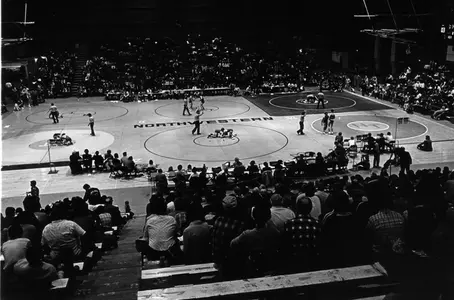
Kraft's bosses originally had financial concerns about this idea for a Midlands Tournament and declined to host it. So in 1963, Kraft invited the best wrestlers from middle-America to the first "West Suburban YMCA Open," named after the local YMCA it was held in.
With the success of the tournament, the Midlands upgraded to being held in Lyons Township High School in La Grange, staying there through the 1971 season. Finally, in 1972, with plans to hold eight mats of simultaneous action, the Midlands was moved to Welsh-Ryan Arena at Northwestern, where it has been held ever since.
As the tournament grew it continued to attract more and more top talent, with over a hundred Midlands competitors continuing on to compete in the Olympics.
Even with the advent of the Midlands, Kraft still had to oversee the wrestling team through their regular and post-season competition. Heading into the 1968 season, the 'Cats were going through a dry spell, without an individual title for four seasons. But this squad looked primed to change that, with senior standouts such as Russ Schneider and Otto Zieman.
At the Big Ten Championships, Schneider rolled through his competition in the 152 lbs. class, continuing that momentum through the national championships, where he would place third, earning All-American status. Schneider told the Daily Northwestern at the time that he believed his success came from self-confidence, a philosophy gleaned from an article on psycho cybernetics.
"I have to keep going over each move in my mind, or else I just couldn't be a success," he said.
Zieman wasn't as fixated on the premise, but he gained confidence throughout the championships as well. With a timely run, he finished fifth in the 160 lbs. weight class, earning an All-American nod of his own.
The following year, Kraft would have to make do without the team's reigning champs. But quickly, another star emerged. In the 167 lbs. class, junior Bill Laursen began to make a name for himself. His success was all the more unlikely because Laursen had spent most of his career, and the season, wrestling at 152.
At the national championships, Laursen was pitted against the third-ranked Jack Bentz of Lehigh. With a strong performance, Laursen pulled off the upset, earning sixth place after he was eliminated by eventual champion Joseph Smith of Iowa State.
Unfortunately, Laursen wouldn't carry his form into 1970, but the team continued to find success. Wydell Boyd and Bill Pauss became focal points in the 134 lbs. and 177 lbs. classes, respectively. Both suffered knee injuries at the same time midseason, but came roaring back, ready for the postseason.
At the Big Ten championships, Pauss toppled all foes, staking a championship for himself. Then, at the national championships, he came up against Michigan State's Gerald Malecek, who he beat for the Big Ten title, in the second round. In a startling upset, the Michigan State man pulled out the victory. But Northwestern still saw national success. While Laursen couldn't replicate his feat from the year prior, falling in the quarter finals, Boyd picked up a string of impressive victories to finish fifth and nab All-American honors.
In 1971, Northwestern would have to weather the graduation of many top wrestlers. While Boyd remained for his senior season, it was sophomore Mark Massery who began to leave his mark on the program. The 126 lbs. man put in fine performances as a freshman, but as a sophomore he began to emerge as an elite force.
He went undefeated through conference play and continued through the conference tournament, claiming his first Big Ten title. Then, at the national championships, he earned All-America honors after a fifth place finish. He set a then-school record with 31 wins on the season, with his sole losses coming against the first, second and fourth ranked wrestlers in his division.
Massery unfortunately missed much of the '72 season when he lost a grade dispute. But the next winter he regained his eligibility, eager to make up for a lost season. His teammates saw that drive in him and named him captain for his senior year.
At the 1973 Big Ten championships, Massery continued where he left off in '71, dominating his way to a second crown. At the national championships, he won 10-9 over Iowa State's Ron Glass, becoming Northwestern's first NCAA wrestling champ since Art Kraft in 1960.
The next season, Northwestern would be led by a pair of juniors: Andre Allen and Dave Froehlich. Heading into the 1974 Big Ten championships, the pair had been among the conference's best, with a stellar year bringing Allen's career record to 69 wins in 79 matches.
But the wrestler had been labeled a "prima donna" by coach Kraft, a term Allen admitted to not even understanding. After a dispute soon before the competition, Allen was benched and left out of the postseason.
While Allen was on the bench, Froehlich made the most of his chance. The 167 pound man, after falling to Iowa's Jan Sanderson in the conference finals, made a strong run at the championship, earning a fifth place finish and being named an All-American.
In 1975, the duo was joined in elite ranks by fellow senior Scott Klippert. The trio proved a formidable force, and much was expected of them in postseason play. At the conference tournament, in the 142 lbs. class, Allen had a near fall in overtime of his championship bout against Purdue's Al Housner to claim a title. Froehlich posted five points in the final 15 seconds of the second period to claim his title. At 177 pounds, Klippert took down Ohio State's Bill Reinbolt to take third. At the national championships, the trio looked to continue their success. While Froehlich couldn't repeat his prior season's success, Klippert took home fourth, while Allen reached the finals to take second.
Four years later, Ken Kraft decided it was time to stop coaching. After 22 years at the helm with eight Big Ten champions, 12 All-Americans, and two NCAA champions, Kraft was moving to another position within the Athletics Department. After two of the school's most successful decades, it was time for another familiar face to join the sidelines.
By David Herder
In December 1962, Northwestern wrestling was in the middle of one of the most successful periods in school history.
With five All-America honors and three Big Ten individual title winners in three years, the Wildcats had thrust themselves into the national picture.
But that winter, the team was making a trip to Wilkes-Barre, Pa. to compete in an annual winter tournament, which meant sitting through 28 hours of round trip car travel. In order to compete in these holiday tournaments, Northwestern always had to travel – there simply weren't any in the Midwest. So head coach Ken Kraft had the simple idea to make one of his own.
Kraft's bosses originally had financial concerns about this idea for a Midlands Tournament and declined to host it. So in 1963, Kraft invited the best wrestlers from middle-America to the first "West Suburban YMCA Open," named after the local YMCA it was held in.
With the success of the tournament, the Midlands upgraded to being held in Lyons Township High School in La Grange, staying there through the 1971 season. Finally, in 1972, with plans to hold eight mats of simultaneous action, the Midlands was moved to Welsh-Ryan Arena at Northwestern, where it has been held ever since.
As the tournament grew it continued to attract more and more top talent, with over a hundred Midlands competitors continuing on to compete in the Olympics.
Even with the advent of the Midlands, Kraft still had to oversee the wrestling team through their regular and post-season competition. Heading into the 1968 season, the 'Cats were going through a dry spell, without an individual title for four seasons. But this squad looked primed to change that, with senior standouts such as Russ Schneider and Otto Zieman.
At the Big Ten Championships, Schneider rolled through his competition in the 152 lbs. class, continuing that momentum through the national championships, where he would place third, earning All-American status. Schneider told the Daily Northwestern at the time that he believed his success came from self-confidence, a philosophy gleaned from an article on psycho cybernetics.
"I have to keep going over each move in my mind, or else I just couldn't be a success," he said.
Zieman wasn't as fixated on the premise, but he gained confidence throughout the championships as well. With a timely run, he finished fifth in the 160 lbs. weight class, earning an All-American nod of his own.
The following year, Kraft would have to make do without the team's reigning champs. But quickly, another star emerged. In the 167 lbs. class, junior Bill Laursen began to make a name for himself. His success was all the more unlikely because Laursen had spent most of his career, and the season, wrestling at 152.
At the national championships, Laursen was pitted against the third-ranked Jack Bentz of Lehigh. With a strong performance, Laursen pulled off the upset, earning sixth place after he was eliminated by eventual champion Joseph Smith of Iowa State.
Unfortunately, Laursen wouldn't carry his form into 1970, but the team continued to find success. Wydell Boyd and Bill Pauss became focal points in the 134 lbs. and 177 lbs. classes, respectively. Both suffered knee injuries at the same time midseason, but came roaring back, ready for the postseason.
At the Big Ten championships, Pauss toppled all foes, staking a championship for himself. Then, at the national championships, he came up against Michigan State's Gerald Malecek, who he beat for the Big Ten title, in the second round. In a startling upset, the Michigan State man pulled out the victory. But Northwestern still saw national success. While Laursen couldn't replicate his feat from the year prior, falling in the quarter finals, Boyd picked up a string of impressive victories to finish fifth and nab All-American honors.
In 1971, Northwestern would have to weather the graduation of many top wrestlers. While Boyd remained for his senior season, it was sophomore Mark Massery who began to leave his mark on the program. The 126 lbs. man put in fine performances as a freshman, but as a sophomore he began to emerge as an elite force.
He went undefeated through conference play and continued through the conference tournament, claiming his first Big Ten title. Then, at the national championships, he earned All-America honors after a fifth place finish. He set a then-school record with 31 wins on the season, with his sole losses coming against the first, second and fourth ranked wrestlers in his division.
Massery unfortunately missed much of the '72 season when he lost a grade dispute. But the next winter he regained his eligibility, eager to make up for a lost season. His teammates saw that drive in him and named him captain for his senior year.
At the 1973 Big Ten championships, Massery continued where he left off in '71, dominating his way to a second crown. At the national championships, he won 10-9 over Iowa State's Ron Glass, becoming Northwestern's first NCAA wrestling champ since Art Kraft in 1960.
The next season, Northwestern would be led by a pair of juniors: Andre Allen and Dave Froehlich. Heading into the 1974 Big Ten championships, the pair had been among the conference's best, with a stellar year bringing Allen's career record to 69 wins in 79 matches.
But the wrestler had been labeled a "prima donna" by coach Kraft, a term Allen admitted to not even understanding. After a dispute soon before the competition, Allen was benched and left out of the postseason.
While Allen was on the bench, Froehlich made the most of his chance. The 167 pound man, after falling to Iowa's Jan Sanderson in the conference finals, made a strong run at the championship, earning a fifth place finish and being named an All-American.
In 1975, the duo was joined in elite ranks by fellow senior Scott Klippert. The trio proved a formidable force, and much was expected of them in postseason play. At the conference tournament, in the 142 lbs. class, Allen had a near fall in overtime of his championship bout against Purdue's Al Housner to claim a title. Froehlich posted five points in the final 15 seconds of the second period to claim his title. At 177 pounds, Klippert took down Ohio State's Bill Reinbolt to take third. At the national championships, the trio looked to continue their success. While Froehlich couldn't repeat his prior season's success, Klippert took home fourth, while Allen reached the finals to take second.
Four years later, Ken Kraft decided it was time to stop coaching. After 22 years at the helm with eight Big Ten champions, 12 All-Americans, and two NCAA champions, Kraft was moving to another position within the Athletics Department. After two of the school's most successful decades, it was time for another familiar face to join the sidelines.
••••••
Be the first to know what's going on with the 'Cats -- Follow @NU_Sports on Twitter, become a fan of Northwestern Athletics on Facebook, check us out on Instagram and download our mobile app from the Apple Store and Google Play! To interact directly with the #B1GCats, visit our Social Media page!
Wrestling - Four 'Cats Earn Bonus Points as Northwestern Downs Maryland in Big Ten Opener (1/9/26)
Saturday, January 10
Wrestling - 'Cats Take Down Wisconsin, 27-11, on Senior Night (2/14/25)
Saturday, February 15
Wrestling - Seven 'Cats Claim Victory in 27-12 Win Over Michigan State (2/8/25)
Saturday, February 08
Wrestling - 'Cats Tame Mustangs, Take Down Cal Poly 29-14 (12/19/24)
Friday, December 20