Northwestern University Athletics
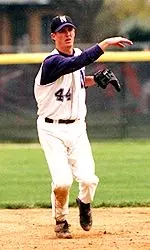
1999 Baseball Preview
6/21/1999 12:00:00 AM | Baseball
January 8, 1999
Paul Stevens has been head coach at Northwestern 11 seasons, and he's seen teams like this before -- twice.
The first time, in 1991, Northwestern featured a little-known shortstop now in the major leagues, Mark Loretta, as well as a very talented supporting cast that included three future draftees -- catcher Joe Perona, pitcher Tom Sandt and outfielder Sloan Smith. In one season, the team went from having its worst conference record during Stevens' tenure to its best -- a nine-game improvement to 15-12-1.
"We had some very talented athletes that not many people knew very much about," says Stevens. "The team never thought it would lose or not get where it wanted to go."
Four years later, Northwestern had slipped again, but in one season it improved its Big Ten mark by five games. Pitchers Brad Niedermaier and Chad Schroeder "came out of nowhere" to help the 'Cats lead the Big Ten in pitching.
"In '95 it was just upset after upset," Stevens remembers. "They just believed they were going to find a way to win each time."
Now another four years have elapsed, and the Wildcats are struggling for Big Ten respectability. Since 1996, Northwestern has not been able to win more than 10 conference games. Last season the team improved its overall record by eight games, clinching a winning record with an upset of Minnesota on the season's final day. But NU only improved its conference mark by one game.
Towards the end of the season Stevens witnessed play that has had him beaming for eight months.
"They went through some adversity," he says. "But basically, I don't believe a lot of these guys gave up near the end of the year -- they were all still battling. They had a tremendous desire to show people what they could do. Their attitude has been something to build on."
Amid the long stretch of often thankless off-season workouts, fortunes have continued to look up for the congealing Wildcats. The younger players have breathed new life into the team's veterans, each group inspiring the other to work just a little bit harder -- harder than Stevens remembers any of his teams working in the off-season. The upperclassmen have welcomed the new infusion with open arms, creating a team where players from every year will be depended upon to play enormous roles.
"This isn't a group of star-studded individuals, but this is an outstanding team," says Stevens. "The chemistry we have here is going to carry these guys a long way. I'm proud of the way this group motivates itself."
In the field, two players with perhaps the brightest baseball futures are each only one year into their Northwestern careers -- sophomores shortstop Jeremy Kurella and catcher Joe Hietpas.
Hitting primarily in the No. 2 spot last season and starting every game, Kurella fit the mold of the prototypical Paul Stevens player -- moving runners around, getting on base, creating opportunities to score. Kurella offered the Wildcats speed as well as a wicked bat. Over time, he became an asset in the field to a team that struggled defensively. He and second baseman J.P. Williamson led the Big Ten in double plays turned last season. Stevens offers a lofty example -- former NU and current Milwaukee Brewers shortstop Mark Loretta -- to explain the potential he sees in Kurella, last year's Big Ten Freshman of the Year.
"He is one of the best defensive players we've seen," says Stevens. "The way Kurella swings from both sides of the plate, he has a future equal to Loretta's. Kurella and Hietpas both have all-America potential."
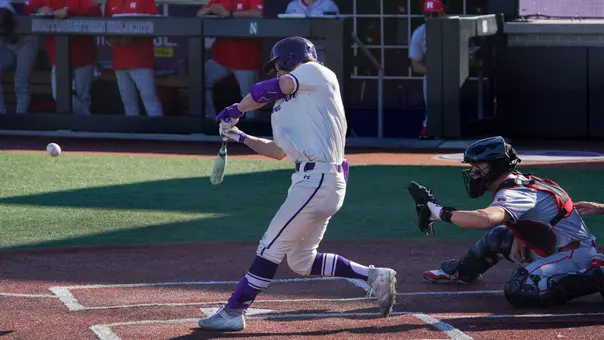
Hietpas, like Kurella, was thrust into some on-the-job training last season, starting 28 of 43 games behind the plate as a freshman. Now as much a veteran as any of the team's returning starters, he also offers the Wildcats a remarkably complete package. He is not only an unusually polished receiver, but he is among the team's top hitters, certainly not a trait expected of a catcher, and he possesses an arm strong enough to place him among the conference elite.
Last season Hietpas tied for the team lead in home runs and led the conference in runners thrown out, despite catching only half his team's games and despite that by the end of the season, "people just weren't running on him." Stevens' biggest concern with Hietpas is only that he will not be overused.
"Hietpas is the real deal," Stevens says. "He is a tremendous leader on the field."
If there is one place the 1999 Wildcats will not be weak, it's up the middle. Second baseman J.P. Williamson, a junior, offers additional stability in the infield. He moves in from third base to replace the graduated Ollie Dunn, and possesses one of the team's biggest bats. The infield corners are still up for grabs, with sophomore Wes Robinson (first), who at the plate "has the ability to break the game wide open," and gritty junior Mike Adams (third) the leading candidates. Junior Pat Thompson, one of the 'Cats' most consistent hitters last season, will play some first base, but will start primarily at designated hitter.
In the outfield, junior Bob Dainton will anchor center after playing in right field most of last season. He will be flanked by two speedy sparkplugs -- senior Ken Kilian, who led the Wildcats in stolen bases last season, and junior Kris Musselman, who was second on the team in on-base percentage. Right on their heels are two players, sophomore Tim DaRosa and junior Jason Anderson, whom Stevens says have made "monumental strides" since the 1998 season.
"We're expecting some real healthy competition," he beams.
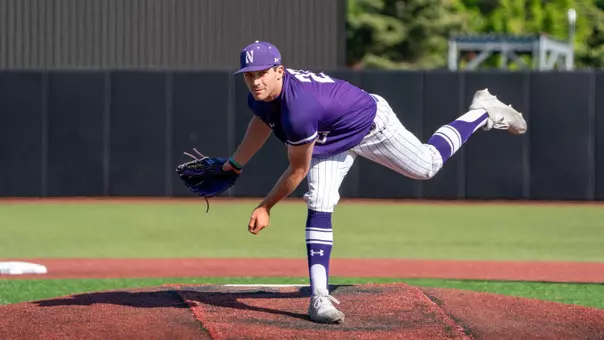
But it is likely to be the mound where the 1999 Wildcats' fortunes will be determined. While Stevens estimates this year's collection of pitchers to be more skilled than even the John Seaman-led group of last season (Seaman is now in the Florida Marlins' minor league system), there is some uncertainty as to how quickly the staff will gel. Only senior Phil Rosengren, drafted by the Atlanta Braves last season, has received any significant recognition. Rosengren has since gotten even better, in Stevens' estimation. Not only has he improved his off-speed pitches, but he has added movement to his fastball. This season he is likely to be the Wildcats' go-to pitcher.
The rest of the staff is young -- with four freshman and three sophomores in the group.
"Phil Rosengren has got to step up and be a leader here," describes Stevens. "He is capable of setting the tone for a pitching staff."
This year Stevens has brought in a trifecta of freshman pitchers, lefty Ryan Bos and righties Zach Schara and Gabe Ribas, any of whom he expects can contribute immediately. He has penciled one, the 6-4 Ribas, right behind Rosengren in the starting rotation.
"Our young guys have thrown the heck out of the ball all fall," says Stevens. "I think their hard work is going to show up on the playing field."
Workhorse senior Nick Franzese, who went 4-2 last season and logged the third most innings pitched on the team, will be back in the rotation and will also be available as a backstop. Junior Ben Dodd, who last season rarely came out of the bullpen for more than an inning at a time, might sneak into the rotation as well. Entering the season, Stevens described Dodd as throwing the ball "better than I could ever expect him to." Sophomore J.J. Standring, who also serves as punter for the Wildcat football team, threw most of his innings in the final weeks last season after a hip injury early. He should also see a heightened role.
"Pitching has to be the catalyst for us, and I think it can be," says Stevens. "There's a lot of competition among these guys to make the group as good as there is. A lot of these guys are on the same page."
To help gain confidence for his young pitchers, Stevens professed keys to be getting ahead in the count more frequently and playing better defense. Stevens blames NU's defense last season as the source of several one-run losses in Big Ten games. NU was 1-6 last season in one-run conference games, committing 44 errors to its opponents 13. Defense was enough of a liability to keep NU's 1998 Big Ten finish behind its conference rank (fifth) in both batting and pitching.
In 1999, the team's defense might actually be an asset, as NU fields a more seasoned group less susceptible to what Stevens classified as "jitters." He hopes an improved defense, hand-in-hand with more aggressive pitching, will give the team a boost as it hurdles headfirst into beefed-up nonconference schedule.
The team begins conference play the first weekend in April. The top competitors may be familiar names -- Ohio State, Illinois and Minnesota to start, but Stevens estimates more parity in the conference than usual this season.
"I see it as a very heated battle," he says. "There are a lot of little things that could make a difference."